Like everyone who has lived for more than a few decades, I have faced tragedy and hardship in my life. I have had a child die, an artery issue that put me in the hospital for 9 days, faced unemployment (https://www.lessonsonpurpose.com/2021/11/02/what-i-learned-being-fun-employed/), broken bones and other setbacks. That said, I face each day with thankfulness and joy, in part due to my faith, family and friends, and by using teachings from the Stoics.
Stoicism, named for the Athenian porch (stoa poikilê) where the first Stoics philosophers lectured, was a dominant philosophical system in ancient Greece and Rome – and taught a balance of physics, logic and ethics. The founder of Stoic thought was Zeno of Citium, a Greek who, in ~300 BC, taught that peace of mind came from living a life of virtue in accordance with nature. Zeno’s contemporary, Epictetus (341-270BC) was a former slave and taught that philosophy’s purpose is to help other attain a tranquil life, with freedom from fear and death. Seneca (4BC – 65 AD) wrote 12 essays, 124 letters and plays dealing with moral issues that remain relevant for a life on purpose, and joy, today.
Stoics taught that most of what man seeks in life – health, wealth, pleasure and power – are not inherently good nor bad, but that virtues, like justice, courage, wisdom and discipline are the only ‘good’. Instead of thinking that life is unfair for putting obstacles in our way, Stoicism is a mindset that teaches that every obstacle life throws at us is an opportunity to practice a virtue – patience, courage, humility, resourcefulness, reason or creativity.
At its core, Stoics teach that while we don’t control what happens in our lives, but we can control how we react to what happens. Here are a few of the ways I have incorporated Stoic life lessons into my own approach to life:
- Acceptance is important:
I have found that angst and fear come in the hiding of issues rather than facing them head on. As a young leader I would often not let my boss or co-workers know about a budding issue – but would ‘sit on them’, and hope for the best. I was often too cocky to admit that something in my area of responsibility was going wrong – but learned over time that humility is often more useful than pride. I learned that nothing ever good comes from ‘sweeping things under a rug’ – that things hidden always surface only grow worse with time. I had to accept my own shortcomings before I could get better.
It’s the same in leadership; when leading a team, I actively work to put any budding issue on the table, and encourage everyone to work on it together. When giving performance feedback I use real examples, or bring others in to ensure the matter is faced head on, accepted as true, so we can work on growth.
The Stoics believe that we must accept the world as it is – truly see it – knowing that it isn’t all rainbows and butterflies. Epictetus taught us to Bear and Forbear – to brace and prepare ourselves against challenges that are sure to happen, but forward movement is the only way to live a fulfilled life. Abraham Lincoln’s life is a great testament to that motto as he accepted and faced his own pain (malaria, smallpox, depression). He was famous for acknowledging that the pain was there – but resolved to act and plowed forward in his task.
Stoics teach us to love fate (Amor Fati in Latin) an attitude of seeing everything that happens in our lives, even pain and suffering, as good, or at least necessary. It is healthy to recognize that bad things do happen, and natural to spend time thinking about ‘why me’ or bemoaning what happened. I have grieved deeply in my life, and it is important to do – but it is as important to recognize that we must move through grief toward a new beginning.
This isn’t just a lesson on positive thinking, but recognizing the issue for what it is (and isn’t) and teaching our minds to be ceaselessly creative and optimistic. Victor Frankl, an Austrian psychiatrist and Holocaust survivor, wrote in his Man’s Search for Meaning, that having a clear ‘why’ coupled with a belief that anything is possible (a hope), will allow humans to sustain any hardship. I truly believe that there is always a WAY through a tragedy or hardship – and that belief in the way makes a solution 10x more likely.
2. Build an Inner Citadel:
The Stoics believed that we should build an Inner Citadel, a cache of tools and thinking that can be called upon in times of need. I think of it as a place inside me of peace and contentment, despite what is going on outside. Much like a bridge or arch that gets stronger when force is applied, we too can be prepared and prepare our minds to face hardship and build reserves to pull from when needed.
For me these tools include breathing, exercise, walks in nature, waking up every day thanking God for the positive things in my life, and always believing that a positive outcome is possible in every situation. See this life lesson where I explain some of the ways I use my super-power of staying calm under pressure. (https://www.lessonsonpurpose.com/2023/02/02/staying-calm-under-pressure/)
Forgiveness of others is key to strong inner strength. For years I was angry with my father, who moved me into a different school every year from 3rd to 10th grade, in search of the next promotion for himself. I have forgiven him for that selfishness, and that anger no longer has a hold on me, nor negatively impacts my life, but a source of learnings that I have applied to my own family. I put my kids’ stability and friendships ahead of my career, giving up promotions so my kids could all attend the same grade school though high school.
3. Negative emotions can be controlled:
While often misunderstood, Stoicism isn’t about life with no emotion, rather it is a thoughtful approach believing that the essence of joy. and a life well lived. is controlling negative emotions. The Stoic lessons teach us to learn along the journey of life and to train our minds to be resilient and creative vs weak and dull. These are helpful exercises for me, and a reminder that so many issues in modern life are from having too much, not too little. Too much junk food, Netflix or phone time are the challenges that many of us face today – not where our next meal or sleep will happen.
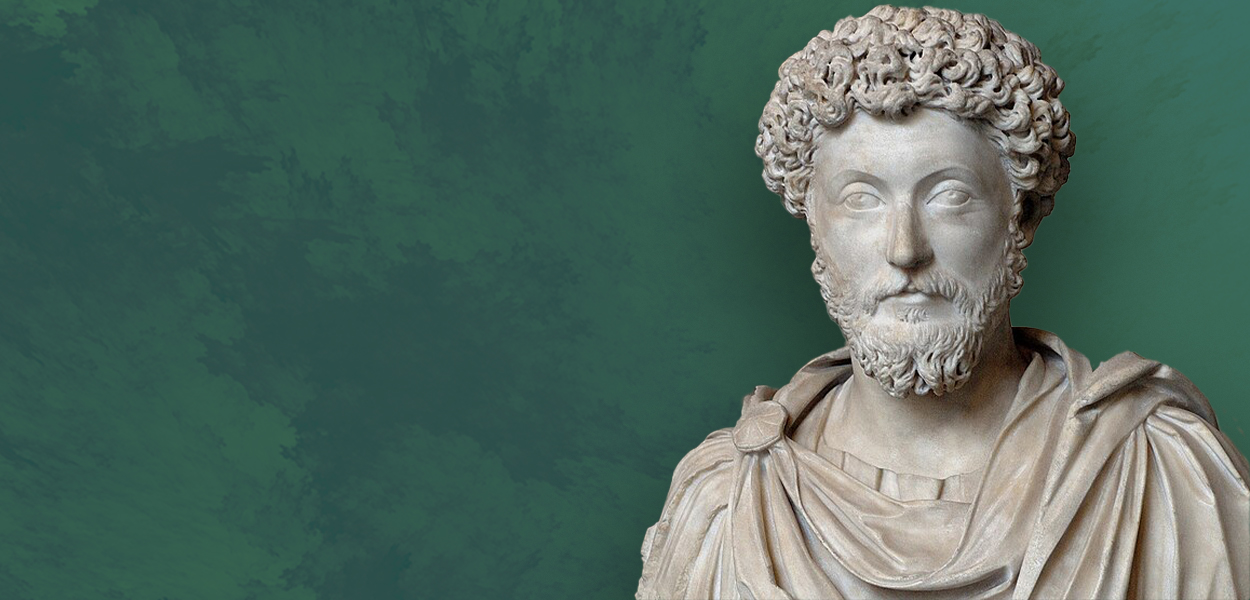
Marus Aurelius (121-180 AD) is the Stoic from whom I have learned the most. He was Roman emperor from 161 – 180 AD and famous for his Meditations, a collection of Stoic thoughts, and notes on life well lived. He wrote “Your soul takes on the color of your thoughts”. In other words, we get to decide how we look at things – will we choose to be miserable or awed, will we be fearful or confident? The issue often isn’t the event – but the story we tell ourselves about the event.
Stoics preach that moderation is key, function more important than form, and we should not live in excess. These lessons remind me that that no matter how cool our possessions and surroundings are, if we are miserable with ourselves then we will be miserable wherever we go.
4. Action is key:
What I enjoy most about Stoicism is that it is a philosophy of action, not just contemplation. Stoic thinkers recognized that we live in an unpredictable and flawed world, but their teaching prepares us to act and thrive in a world that in large part is out of our control. Stoics teach thought, action and then acceptance. They don’t just dream, expect and wait.
Some of the most unhappy people whom I have met I would describe as ‘stuck’. Stuck in unhealthy habits, relationships – stuck waiting for something to change – stuck watching the news, wallowing in the evil and bad in the world. My experience has shown that those most joyful are not those who have seen no tragedy, but those who have faced adversity – and moved their way though it.
Stoics have taught me to ask the question – what would I do if I was not afraid? Afraid of failure, afraid of what others would think of me, afraid of not having everything figured out. This mindset has been freeing for me, and has moved me to action – including starting my own company, well before everything was figured out.
A Stoic phrase often used today is Memento Mori, and another way I have used to ‘unstick’ myself. A Latin phrase meaning ‘remember you must die’. While it sounds morbid, I believe that remembering that we are not immortal reminds us to seek the joy in life, that every day is a gift, and that we must actively seek to unwrap that gift. All paths lead to the grave, so I make sure to thank God for every day I have been given, and adopt a spirit of thankfulness not wishfulness. In my Christian faith, we use holy days, like Ash Wednesday to remember that meditations on our inevitable death will bring us closer to God and live a life more fully in the present. Seneca advocated living every day “as a complete life” and I like his advice : “Let us compose our thoughts as if we’ve reached the end. Let us postpone nothing. Let’s settle our accounts with life every day.”
We all suffer – but the way we accept and act in the face of adversity can define meaning in our lives.
In addition to Memento Mori and Amor Fati, the Stoics gave us other meditations, or thought problems, intending to challenge our thinking. Many of you may not need help imagining bad things happening to you, or couldn’t think of anything worse than putting yourself in a MORE challenging situations. But, these are tools intended to challenge our thinking and build our Inner Citadel. These are meant to be tools that allow us to work through and then eliminate the negative impact of emotions.
- Pre-Mortem (or pre-meditation of evils) is a technique where you pre-think what could go wrong, and develop a plan if these things would happen. When faced with unemployment I wrote down what scared me – things like not being able to provide for my family, loss of respect from my friends. Writing them down did two things for me – first, made me recognize that there were many ways for me to provide for my family, and secondly, as soon as these fears were committed to paper, I was able to get the thoughts out of my head, and into a more actionable format. They were less scary when faced and named, as I could focus on the path ahead, not ruminate on the issue itself,
- Negative Visualization: visualizing a negative thing (what if I were blind) and then being thankful for the positive (sight) or visualizing being unemployed and then being thankful for a stable job. This teaches that we must live in our spheres of control, not things we cannot control. Worrying about the world’s problems that we cannot control just leads to fear.
While many of you are experts in negative visualization and can imagine horrible things happening – you may be missing the second half of the exercise – moving to thankfulness of the positive things in your life. I have also found it is best to do this exercise in the morning, not the evening, and moving my thinking to what things I can control. For example, when nervous about my job performance, I remember that while I can’t control what the board or my boss will do – I can focus on ensuring my brain doesn’t associate my work performance, or net worth with my self-worth.
- Voluntary Discomfort: lessons can come from putting oneself in challenging physical situations, like walking barefoot, standing in the rain or running that extra mile – and lessons are learned when we expand the zone of comfort. When I have done this exercise it helped be control negative emotions when things in my physical environment are not going as planned (I recently practiced this sitting in a middle airplane seat on a long flight – embracing it and making that time productive)
- Voluntary hardship: doing things that are hard helps you grow. In our modern age these can include simple things like taking the stairs, or parking in the faraway parking space. This is much preferred to getting on the ‘hedonic treadmill’ of easy thinking to step into where small purchase and pleasures just lead to more, and more and more.
Shakespeare said that nothing is ever bad or good, but thinking makes it so. I hope these ideas may be helpful for you to see the world from a new perspective, accept and adopt to the challenges you face, and act – doing what you can. Memento Mori!